In order to construct a DIY indoor fly trap, collect an old jar along with an attractant such as sugar or vinegar. Include dish soap to reduce surface tension. Form a funnel to facilitate easy access for flies and ensure it is securely attached. Position the trap near food sources and well-lit areas where flies tend to congregate. Frequently inspect and refresh the bait, and clean the trap to maintain its efficiency. By studying fly behavior, you can improve your strategies for even more effective results. Discover additional tips ahead!
Gather Your Supplies
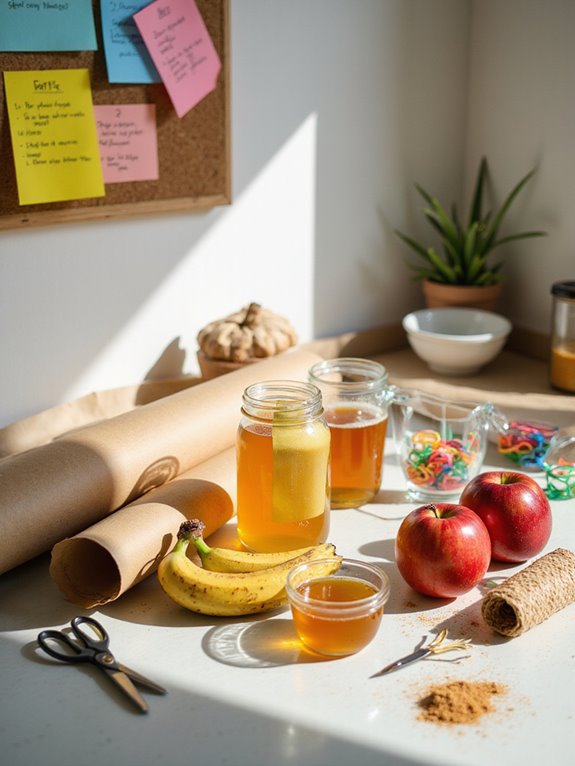
To develop your DIY indoor fly trap, you’ll need to assemble some necessary supplies. Recognizing fly patterns is crucial for successful trapping, so think about what lures these bothersome insects. Obtain a receptacle like an old jar or bottle, along with some sugar, vinegar, and dish soap. The sugar and vinegar will entice the flies, while the dish soap diminishes the surface tension of the liquid, making it difficult for them to break free. It is essential to act swiftly and effectively since flies are quite agile. Once you have all items together, you will be well-equipped to establish a trap that can significantly lower their population. A little bit of organization can greatly enhance your living environment!
Choose the Right Container
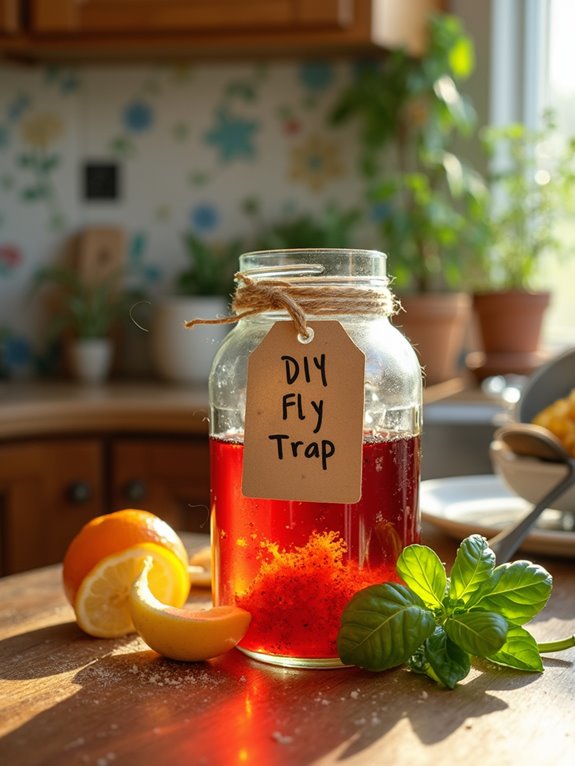
Selecting the appropriate container is crucial for your DIY indoor fly trap. Begin by assessing container sizes; you’ll want something that can accommodate liquid bait while still being manageable. A smaller container is more suitable for table or countertop traps, whereas larger containers might be better for more expansive indoor spaces. Consider the materials of the container as well. Glass jars are sturdy and can effectively contain your bait, while plastic containers may provide lightness and convenience. Ensure your container has an opening wide enough for flies to enter but not so large that they can easily escape. With the right dimensions and material, your fly trap will be more efficient, giving you a higher likelihood of capturing those troublesome pests!
Prepare the Bait
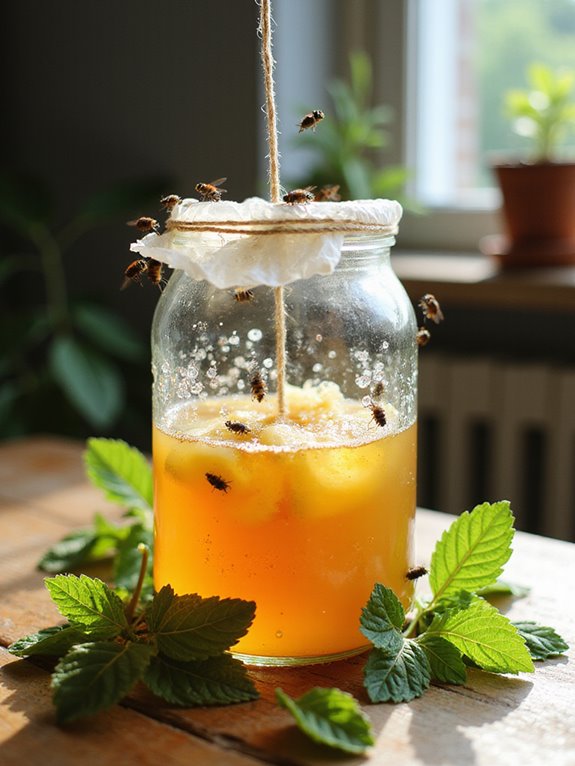
Formulating an attractive bait is crucial for luring flies to your trap. There are various natural bait options that are easy to make. Here are some suggestions to kickstart your process:
- Fruit scraps: Overripe bananas or apple cores are excellent choices, as their scents are strongly appealing to flies.
- Vinegar mixtures: A combination of apple cider vinegar and a touch of dish soap can attract flies while effectively trapping them.
- Sugar water solutions: Mix sugar with water to create a syrup that will entice flies.
If you want an invigorating twist, consider incorporating a few drops of essential oils like lemongrass or peppermint. These aromas can appeal to flies, enhancing your bait’s allure and increasing your chances of success! Get inventive and try out various combinations!
Add Water to the Container
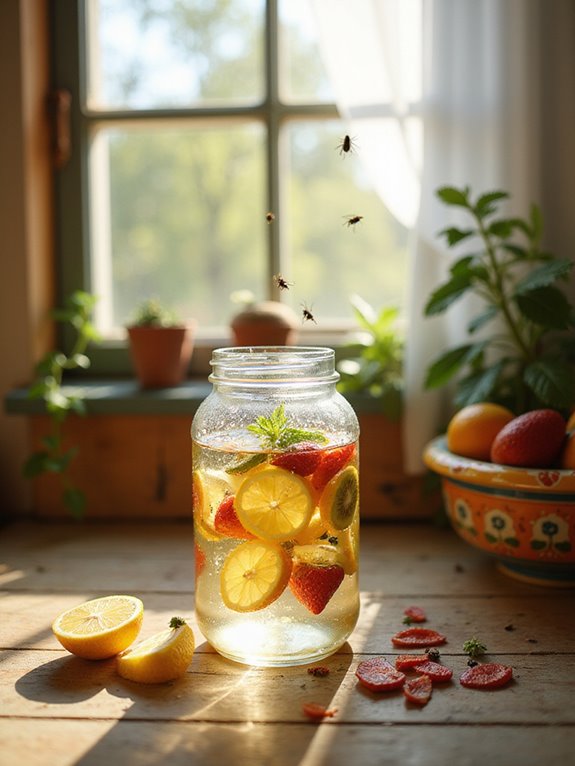
After you have prepared your bait, the next step involves adding water to the container. Consider the type of water suitable for your trap; a mixture of sugar water or vinegar can boost its efficacy. Aim for approximately an inch of liquid inside the container, although this may differ depending on your container dimensions. If your container is larger, you may need additional water, ensuring there’s plenty to trap those bothersome flies. Be cautious not to overfill it; you want to avoid having the bait floating or becoming inaccessible. Adding a few drops of dish soap can also assist in breaking the surface tension of the water, making it challenging for flies to escape once they land. Happy trapping!
Create a Funnel
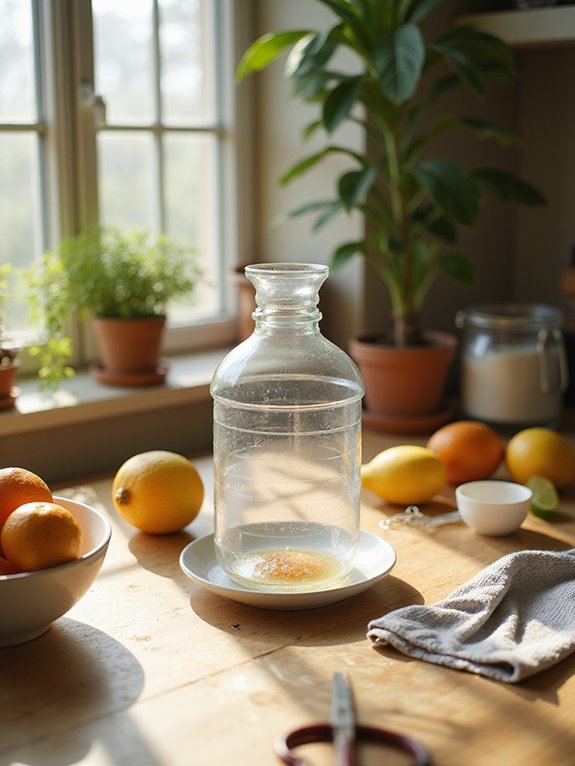
A funnel serves an integral function in your DIY indoor fly trap setup. It directs flies into the trap while preventing their escape. You can select various funnel designs based on your available resources. Here are three popular funnel materials to consider:
- Plastic Bottles: Cut the top off an empty bottle to create a simple funnel.
- Paper: Roll a sheet into a cone shape and secure it with tape.
- Cups: Utilize a disposable cup with a smaller opening cut into the base.
Each option successfully channels flies toward the liquid bait. Ensure your funnel fits snugly within your container to maximize effectiveness. Once you have crafted your funnel, you’ll be set to construct your trap and tackle those annoying flies!
Assemble the Trap
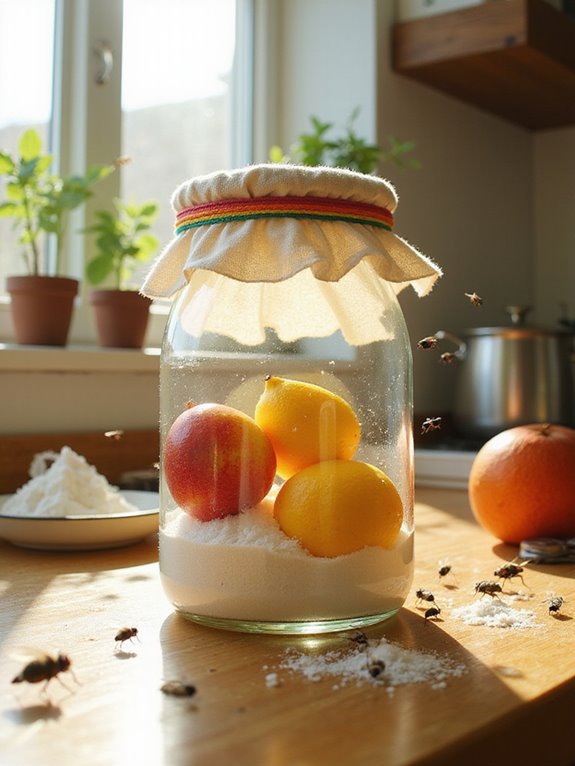
With your funnel created, it’s time to combine everything and assemble your trap. First, collect the materials required: a jar or bowl, your funnel, and some bait such as sugar water or fruit. Position the funnel securely into the jar or bowl, ensuring it fits tightly to stop flies from escaping. Next, pour the bait into the base of the jar, but take care not to overfill. The funnel should be inserted with the narrow end pointing down into the bait. This trap assembly is crucial; it channels flies into the jar while preventing them from escaping. Ensure everything is stable so the trap can operate effectively. You’ve got this!
Position Your Trap

To successfully capture those bothersome flies, it’s key to strategically position your trap in an optimal location. Selecting the best spots will enhance visibility and increase your chances of success. Here are some pointers to assist you:
- Close to food sources: Flies are drawn to food, so situate your trap near areas where meals are prepared or eaten.
- Well-lit areas: Flies are attracted to light, so consider placing the trap in brightly lit locations to draw them in.
- High-traffic zones: Set your trap in areas where flies usually gather, such as near windows or doors.
Monitor the Trap
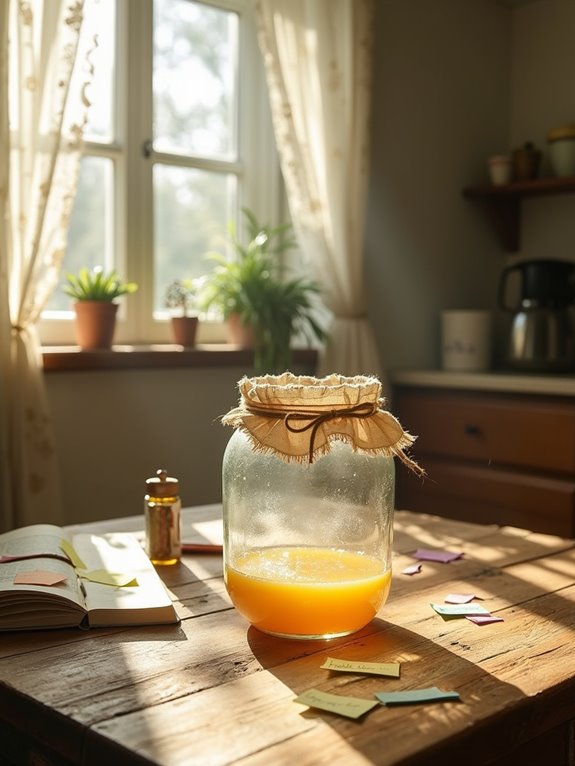
How frequently shouldyou check your trap? Consistent evaluation is crucial for successful fly management. Try to examine your trap every few days. This will enable you to observe fly activity and assess how effectively your trap is functioning. Monitor the quantity of flies captured, as this can guide your subsequent actions.
Utilizing monitoring techniques such as recording peak periods for fly captures can also enhance your trap’s efficiency. You may detect that more flies emerge during specific times, which allows you to modify your trap’s position or bait as needed. By remaining vigilant and observant, you’ll boost your fly control endeavors and keep those bothersome insects out of your home.
Dispose of Captured Flies
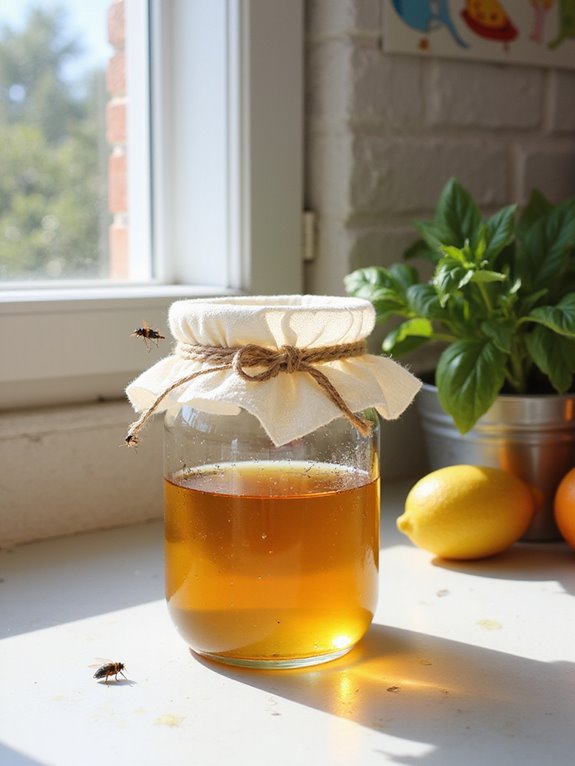
Once you’ve monitored your trap and evaluated its effectiveness, the subsequent action is to dispose of the captured flies appropriately. It’s vital to consider both efficient fly disposal techniques and ecological implications during this step.
Here are three effective methods for disposing of flies:
- Seal and Trash: Carefully enclose the trapped flies in a plastic bag and throw them in the trash.
- Compost: If your compost heap reaches sufficient heat, you can add the deceased flies, turning them into nutrient-rich compost.
- Flushing: For smaller amounts, you might flush them down the toilet, ensuring they don’t return to your kitchen.
Select a method that aligns with your environmental beliefs and contributes to a clean environment!
Clean the Trap
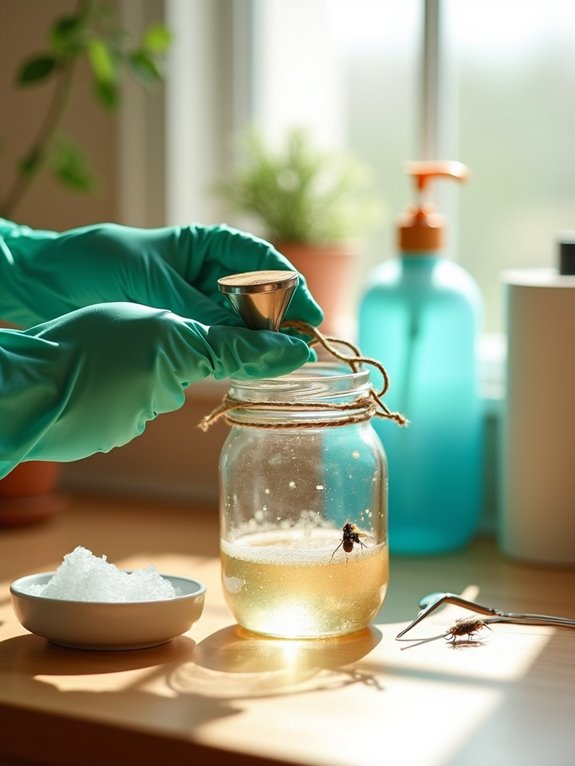
Regular cleaning of the trap is crucial for preserving its efficacy and avoiding unpleasant odors. To begin, gently take the trap from its designated location. Dispose of any dead flies and debris, ensuring you wear gloves for hygiene. Rinse the trap with warm, soapy water to eliminate any sticky remnants. Focus on the corners, where buildup usually occurs. Once rinsed, allow the trap to air dry thoroughly before putting it back together. This trap maintenance not only helps manage odors but also extends the trap’s lifespan. Keep in mind that a clean trap signifies it’s prepared to catch more bothersome flies. By maintaining cleanliness, you’ll foster a more pleasant environment in your home. Happy trapping!
Replenish the Bait

To ensure your fly trap operates effectively, routinely replenishing the bait is essential. As flies are drawn to fresh scents, old bait loses its effectiveness over time. Monitor bait lifespan and replace it when it starts to lose freshness. Here are some bait alternatives that can boost your trap’s efficiency:
- Sugar water or honey blended with vinegar
- Fruit remains, like overripe bananas or apples
- A blend of water and dish soap to ensnare flies
Experiment With Different Baits

Identifying the ideal bait for your indoor fly trap can greatly influence its effectiveness at attracting those troublesome insects. Begin by trying out different options such as fruit juices and vinegar mixtures. You might also explore sugar water or honey traps, which draw flies with their sticky sweetness. If you’re feeling adventurous, beer lures can be very effective as well! Don’t overlook essential oils and yeast combinations, since many flies are particularly attracted to these aromas. Overripe fruits also serve as an excellent choice, providing natural allure. Experiment with these baits to determine which one attracts the most flies. Remember, a bit of experimentation can be highly beneficial in keeping your home fly-free!
Prevent Future Fly Infestations
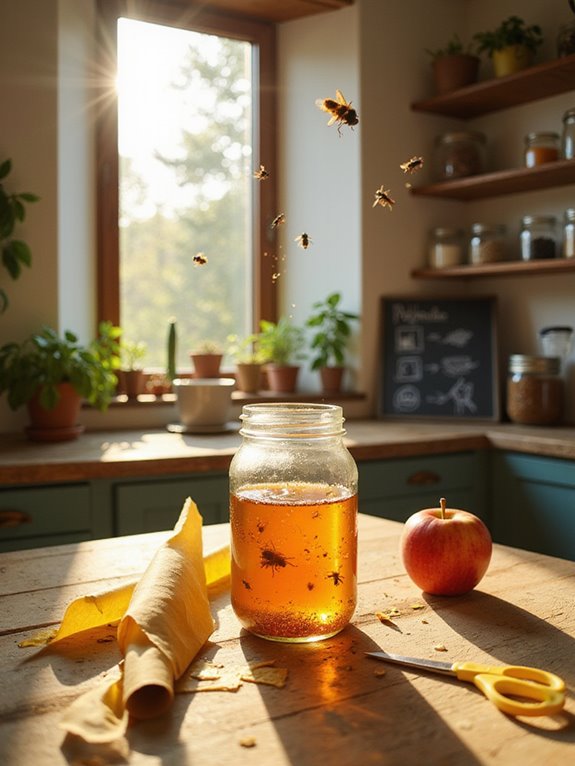
Although you may have successfully captured some flies, preventing future infestations is essential for sustaining a fly-free environment. Implementing effective fly prevention techniques will make a notable difference. Here are some indoor cleanliness suggestions that can assist:
- Keep food securely sealed and stored to remove tempting scents.
- Regularly clean surfaces and promptly address spills, as flies are fond of sticky residues.
- Frequently empty garbage bins and ensure they are tightly covered to deter breeding.
Conclusion
You now have your DIY indoor fly trap all set! By following these straightforward steps, you’ve not only crafted a handy tool but also enhanced your environment. Think of it as gently ushering unwanted visitors out the door. Bear in mind, with a bit of upkeep and innovation, you can keep those annoying flies away. Remain proactive in your battle against future infestations, and savor your peaceful space devoid of distractions!


