Integrating big stones into your landscaping can significantly enhance your outdoor area. You can establish a natural centerpiece by positioning boulders close to paths or flower gardens. Utilize them as borders for raised garden beds, promoting optimal drainage for your plants. Craft creative paths with larger stones to lead guests through your garden. Interested in discovering more effective strategies and concepts to make your landscape stand out? Continue exploring these innovative rock landscaping alternatives!
Crafting a Natural Centerpiece
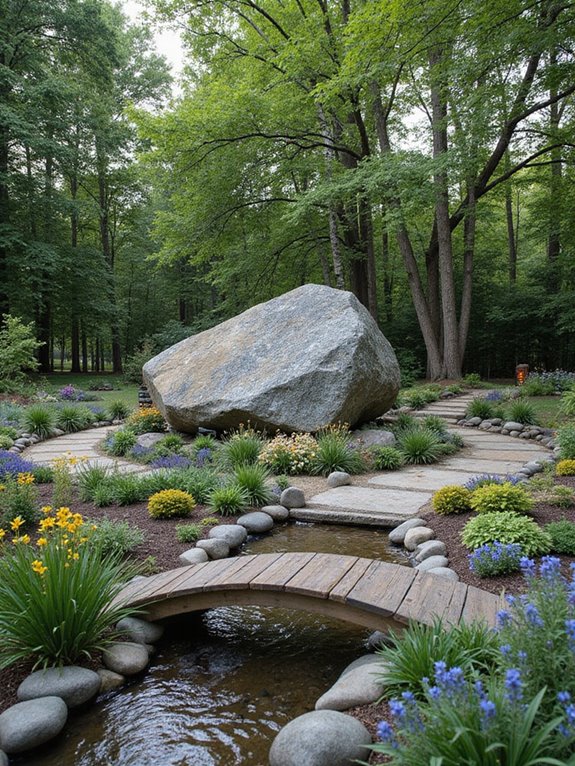
When considering landscaping, incorporating big stones can convert your outdoor environment into a breathtaking natural centerpiece. For achieving visual equilibrium, think through your stone arrangement meticulously. Begin by placing larger stones in strategic spots that catch the eye, like near paths or flower beds. Surround these centerpiece rocks with smaller stones or gravel to amplify the contrast and enhance their prominence. Layer the stones with greenery that complements the hues and textures, adding vibrancy and movement to the design. Keep in mind, a thoughtfully arranged configuration not only looks appealing; it fosters harmony in your landscape. Therefore, don’t shy away from experimenting with various placements until you discover the perfect balance for your one-of-a-kind outdoor haven!
Constructing Raised Garden Beds
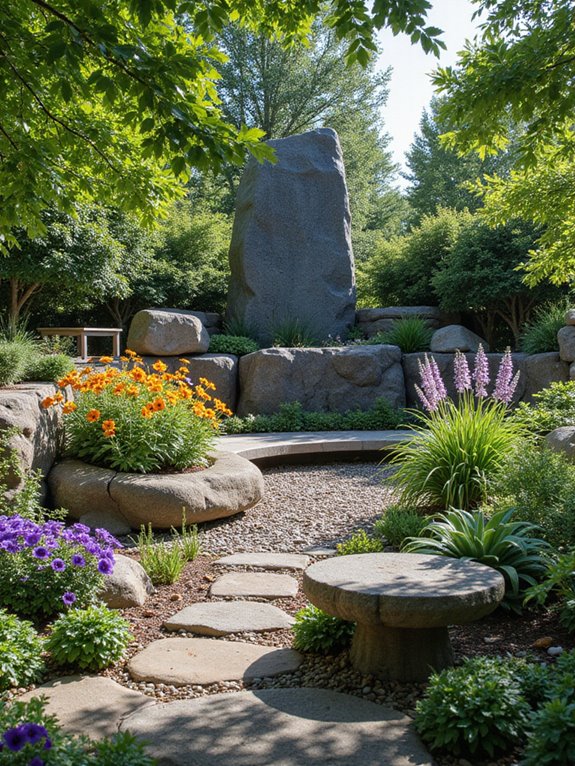
If you aim to elevate your gardening skills, constructing raised garden beds is an excellent choice to consider. These gardens enable you to manage soil drainage, ensuring your plants flourish. By placing your garden at a higher level, you decrease the probability of root decay and other complications caused by excess moisture. When selecting your plants, take into account their requirements; herbs and vegetables typically thrive in raised beds as they can be more accessible for harvesting. You can use big stones as borders for your beds, adding a natural aesthetic while keeping a tidy appearance. Moreover, the stones can assist in keeping the soil secure. Get inventive and watch your gardening area evolve into a magnificent, functional landscape!
Building a Stone Wall or Retaining Wall
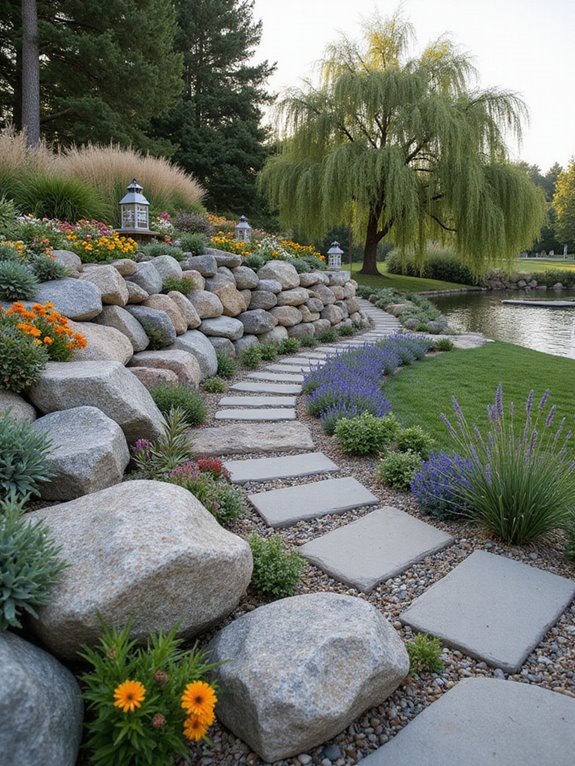
Constructing a stone wall or retaining wall can bring both utility and aesthetic appeal to your outdoor environment. These structures not only beautify the landscape but also assist in managing soil erosion and create flat areas for planting. When selecting materials for your stone wall, consider alternatives like sandstone, granite, or limestone; each offers a unique visual charm.
Benefits of a retaining wall include preventing soil displacement and establishing useful terraces for gardening or outdoor activities. To build your wall, begin with laying a stable foundation and stacking stones securely. Incorporate plants or flowers within the wall for added allure. Keep in mind, your stone wall fuses practicality with visual allure, making it a striking feature in your landscaping endeavor. Your revamped area will undoubtedly impress!
Creating Decorative Pathways
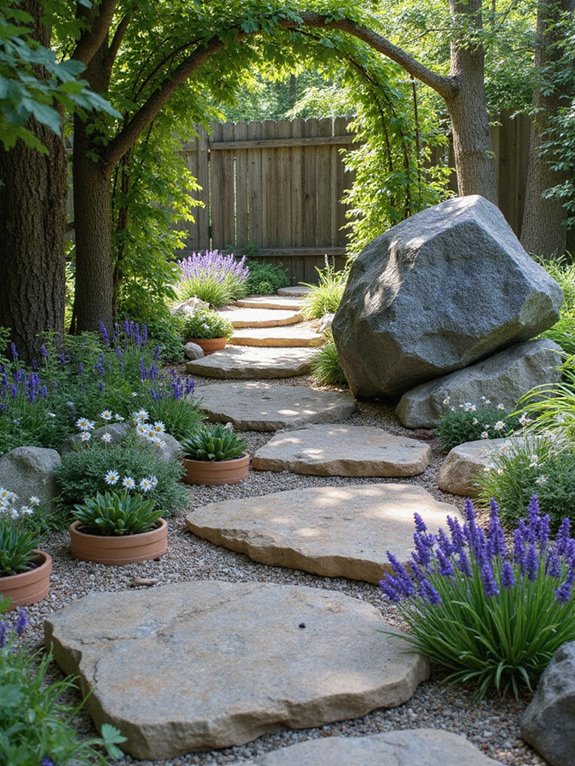
Once your stone wall stands confidently, contemplate enriching your landscape by forming decorative pathways. Using large stones, you can design eye-catching artistic layouts that not only attract attention but also enhance your garden’s appeal. Begin by selecting a variety of pathway materials, such as gravel, mulch, or even pavers, to beautifully complement your stones. Scatter larger stones along your pathway for visual interest and to support walking paths. Consider curving the paths for a more engaging flow, encouraging exploration. Incorporating seasonal plants next to the pathways can also instill liveliness, making your landscape more colorful. Remember, decorative pathways can transform your yard into a warm and inviting oasis. Get inventive and relish the process!
Improving Water Features With Stones
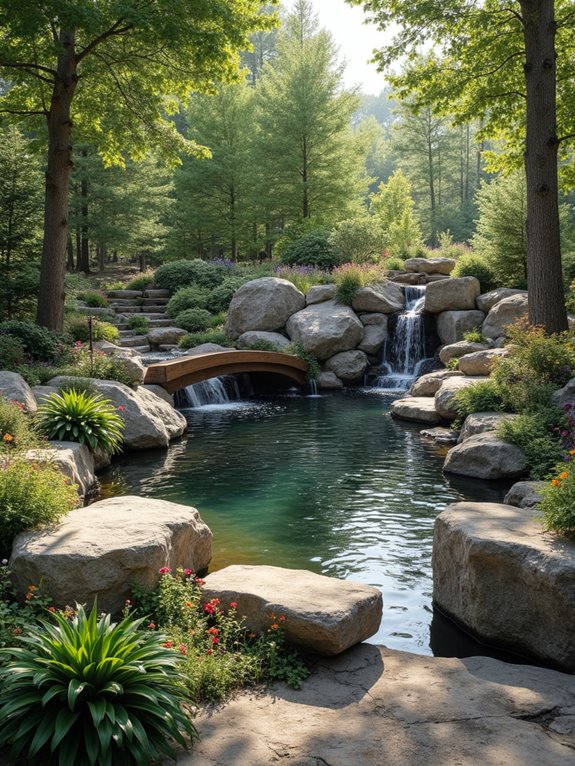
Incorporating large rocks into your water features can significantly elevate their beauty and establish a more organic-looking setting. Consider various styles of water features, like ponds or fountains, and think about where to place these stones for the greatest effect. Positioning large rocks at the edges of your pond can create a visually delightful shore, while appropriately placing them within a fountain can add intriguing texture. You can also utilize rocks as a backdrop for aquatic plants, enhancing the overarching design. Experimenting with different rock placements can help achieve a harmonious look, catching the eye and creating a peaceful atmosphere. By integrating these natural components, you’ll enhance your landscape and enjoy a more cohesive and welcoming outdoor area.
Utilizing Large Stones as Seating Areas
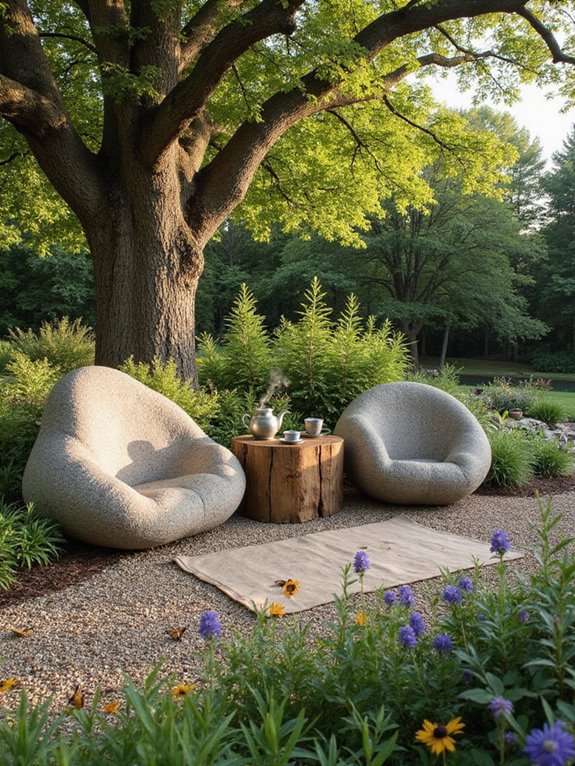
Large stones can provide more than just visual appeal in your landscape; they can also serve as functional seating areas that encourage relaxation and social interaction. Imagine using these natural formations as rock seating during outdoor gatherings; they create a unique and welcoming ambiance. Opt for larger, flatter stones for comfortable seating, allowing guests to lean back and appreciate the scenery. You can arrange these stones in a circle to encourage conversation or place them near a fire pit for cozy nights. Consider adding cushions or low-maintenance decorations like potted plants for added comfort and flair. With a touch of creativity, you can transform ordinary stones into stunning seating alternatives that enhance your outdoor experience and make your space genuinely inviting.
Integrating Stones Into Vertical Gardens
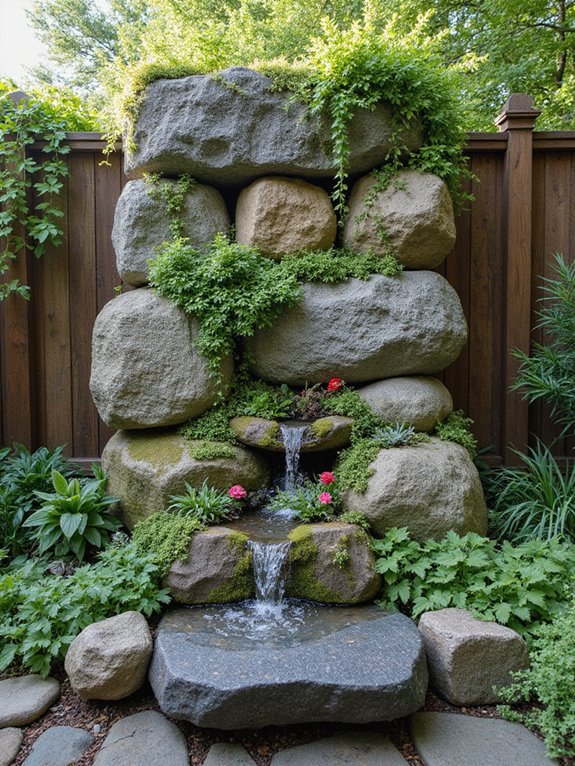
When you wish to design a spectacular vertical garden, integrating rocks can bring depth and character to your layout. By selecting suitable stones, you can improve both aesthetics and plant vitality through vertical layering. Here are three ideas.to get you underway:
- Place Larger Stones: Utilize larger stones at the base to create a solid foundation, supporting the lighter elements on top.
- Establish Planting Niches: Arrange smaller stones between layers to form natural niches for herbs or succulents, promoting healthy growth.
- Add Focal Elements: Select distinct stones to act as visual centers, attracting attention and enhancing the charm of your vertical garden.
With the appropriate choice of stones and a careful strategy, your vertical garden will truly be a remarkable feature!
Creating Decorative Borders and Edging
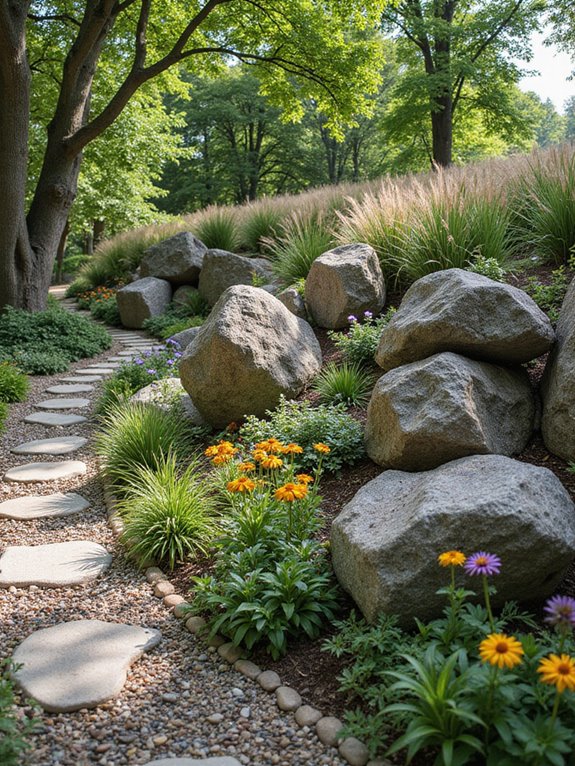
Designing ornamental borders and edging with substantial stones can significantly enhance your landscaping design. To begin, think about stone selection methods that harmonize with your garden’s aesthetics. Opt for boulders, flagstones, or smaller pebbles depending on your desired appearance. Consider color pairings for borders—those that harmonize with your blossoms and plants will yield a unified look. You can combine and contrast colors and textures for enhanced visual dynamism. Place the stones in a design that ensures they are stable and secure. This method not only outlines areas but also injects a natural vibrancy into your landscaping. So, collect your large stones, and unleash your creativity! You’ll be astonished at how a well-designed border can revitalize your outdoor environment.
Enhancing Texture With Rock Gardens
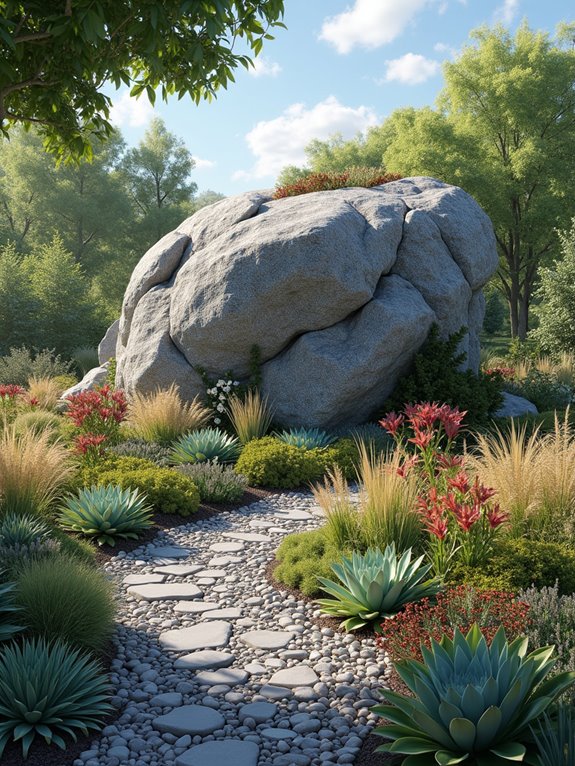
Rock gardens introduce an exceptional layer of texture to your landscape, boosting the aesthetic charm of your outdoor area. They provide significant advantages for rock gardens, such as minimal upkeep and resistance to drought. When designing yours, keep these suggestions in mind for choosing appropriate stones:
- Select Diverse Sizes: Blend larger boulders with smaller stones to create depth and intrigue.
- Integrate Flora: Incorporate alpine plants or succulents that flourish in rocky settings to complement your stones.
- Design Natural Walkways: Organize stones to create winding paths that lead visitors through your garden, enhancing functionality and aesthetics.


